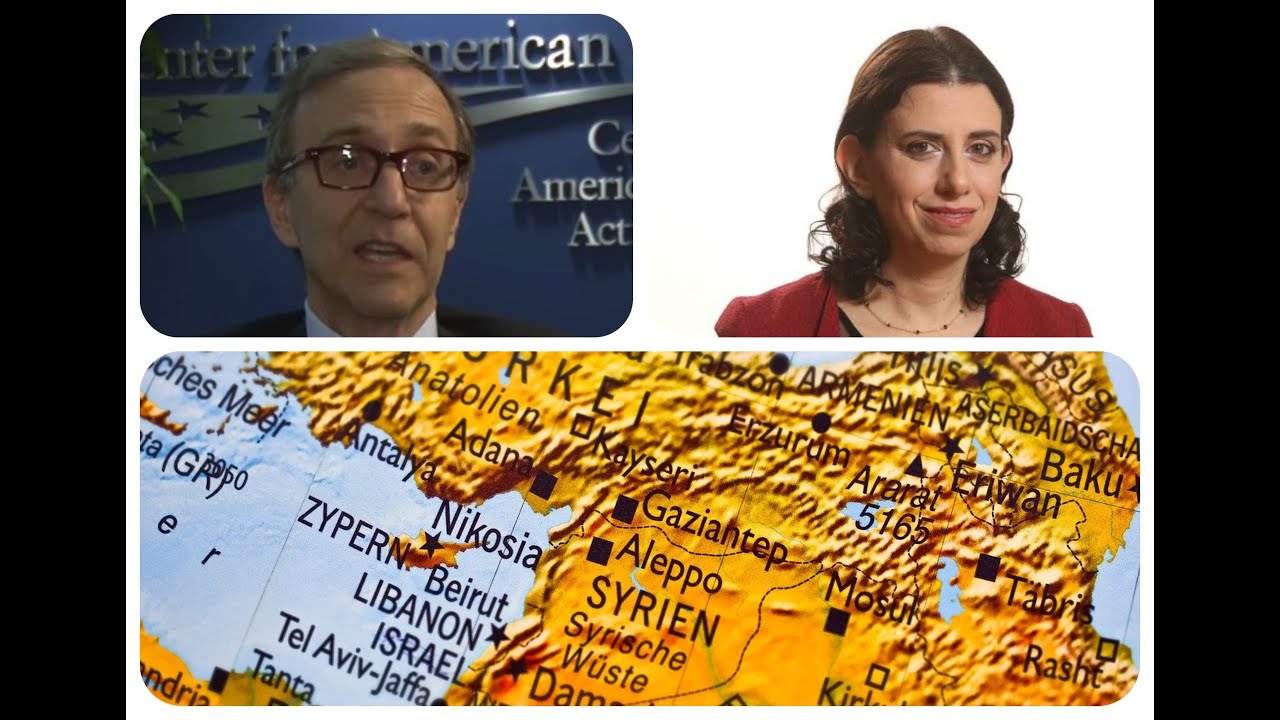
After 17 years of Recep Tayyip Erdogan and his Justice and Development Party (AKP) ruling in Turkey, the country is now involved militarily in Iraq, Syria, Libya, and the eastern Mediterranean. Meanwhile Erdogan is seeking more intervention in Yemen, Lebanon, and Somalia. Under President Erdogan, Turkey has also supported non-state actors such Hamas in Palestine and the Musilm Brotherhood in Qatar. At the same time, Turkey is facing a dire economic crisis, authoritarianism, and an unsolved Kurdish question.
Is the expansionism policy Erdogan’s or Turkey’s? Is it in Turkey’s national interest in the long term? What are the positions of Turkey’s institutions and the opposition parties on expansionism? Should it continue post Erdogan? Can the Turkish opposition build up alliances and unite to defeat the AKP in 2023? Would the Kurds be kingmakers again? And more questions were directed to our distinguished speakers during the discussion.
Speakers:
Alan Makovsky– Senior fellow for National Security and International Policy at American Progress
Gallia Lindenstrauss– Senior Research Fellow at the Institute for National Security Studies
Alan Makovsky
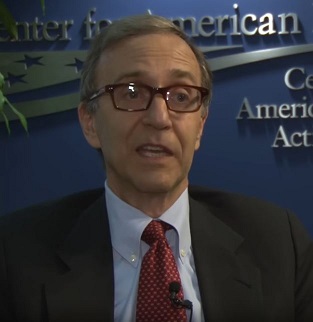 Mr. Makovsky is a senior fellow for National Security and International Policy at American Progress. From 2001 to 2013, he served as a senior professional staff member on the Committee on Foreign Affairs in the U.S. House of Representatives, where he covered the Middle East, Turkey, and other related issues.
At the Washington Institute for Near East Policy—a private think tank where he worked from 1994 to 2001—Makovsky wrote widely on various Middle Eastern and Turkish topics. He also founded and directed the Washington Institute’s Turkey Research Program.
At the State Department where he worked from 1983 to 1994—Makovsky variously covered southern European affairs and Middle Eastern affairs for the Bureau of Intelligence and Research. He also served as the political advisor to Operation Provide Comfort in 1992 and as the special advisor to the special Middle East coordinator from 1993 to 1994.
Gallia Lindenstrauss
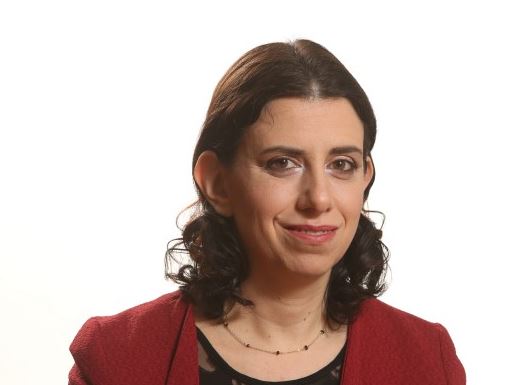 Dr. Lindenstrauss is a Senior Research Fellow at the Institute for National Security Studies and specializes in Turkish foreign policy. Her additional research interests are ethnic conflicts, Azerbaijan’s foreign policy, the Cyprus issue, and the Kurds. She has written extensively on these topics and her commentaries and op-eds have appeared in all of the Israeli major media outlets, as well as in international outlets such as National Interest, Hurriyet Daily News, Turkey Analyst and Insight Turkey. Dr. Lindenstrauss completed her Ph.D. in the Department of International Relations at Hebrew University. She formerly lectured at the Hebrew University of Jerusalem and at the Interdisciplinary Center, Herzliya, and was a postdoctoral fellow at the Leonard Davis Institute for International Relations at the Hebrew University, and a visiting fellow at the Bipartisan Policy Center.