
Washington Kurdish Institute
August 10, 2020 marks a century of the Treaty of Sèvres between the remnants of the Ottoman empire and the allied powers to restore much of the Middle East and Anatolia. Though never implemented, the Treaty of Sèvres recognized the Kurds’ self-determination, a right the Kurds continue fighting for since then.
What is the status of Kurdish nationalism after one century of struggle? What are the lessons learned from the past? Is independent Kurdistan realistic after the Kurds sacrificed millions of lives without achieving their goals? What has changed in US policies and the international community toward the Kurds and their demands? Have the countries with Kurdish populations changed their approach to the Kurdish cause after a century of conflict? And more questions will arise during the panel discussion.
Speakers:
About Speakers:
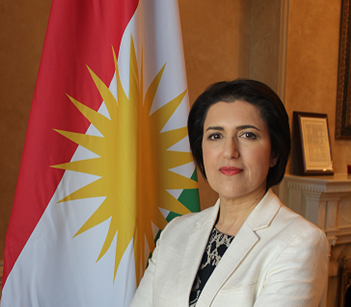 Bayan Sami Abdul Rahman is the Kurdistan Regional Government (KRG) Representative to the United States of America. Key to her role are strengthening ties between Kurdistan and the United States, advocating her government’s position on a wide array of political, security, humanitarian, economic, and cultural matters and promoting coordination and partnership. Prior to her US appointment in 2015, Ms. Abdul Rahman was the High Representative to the United Kingdom. She was elected to the Leadership Council of the Kurdistan Democratic Party in 2010.
Before her career in public service, Ms. Abdul Rahman worked as a journalist for 17 years. She began her career on local newspapers in London and won the Observer Newspaper’s Farzad Bazoft Memorial Prize in 1993, which led her to work at The Observer and later at the Financial Times. She worked for the FT in Britain and in Japan, where she was Tokyo Correspondent.
Her late father, Sami Abdul Rahman, was a veteran of the Kurdish freedom movement, joining the Kurdistan Democratic Party in 1963 and playing a critical leadership role in the Kurdish and Iraqi opposition to Saddam Hussein’s regime. He held the post of Deputy Prime Minister of the Kurdistan Regional Government and General Secretary of the Kurdistan Democratic Party (KDP). Sami Abdul Rahman was killed alongside his elder son Salah and 96 others in a twin suicide bombing in 2004. Ms. Abdul Rahman was born in Baghdad. Her family briefly lived in Iran in the mid-1970s before moving to Britain in 1976. She is a history graduate from London University.
 Dr. Gina Lennox is a research writer having worked in film, radio and teaching, with five published non-fiction books, one being ‘Fire Snow and Honey – Voices from Kurdistan.’ She also has a PhD in landownership, agriculture and natural resource management. Gina began working with Kurds in 1994, when she made a series of radio programs for ABC Radio national. Their stories would not leave her mind so in 1998 she returned to Australia from living in Egypt to collect interviews, essays and stories of Kurds from all over Kurdistan, as well as Armenia and Georgia, for the book ‘Fire, Snow & Honey’. This book was launched at an international conference called ‘Uniting in Diversity – A Kurdish Perspective’ held at NSW Parliament House a month after 9/11. The conference was attended by Bashur ministers and presidents of universities and others from other parts of Kurdistan, as well as Australian Kurds from all political and geographic persuasions. Gina organised meetings between the overseas visitors and Australian politicians, bureaucrats and universities and went on to do some work for KRG Australia. Then in 2013, 2014 and 2016 Gina worked in Bashur for a construction company and conducted research into agriculture in the Kurdistan Region and water resource management in Kirkuk. In 2015, Gina and Zirian Fatah started Kurdish Lobby Australia to advocate for peace, democracy and prosperity for all people in all parts of Kurdistan. Gina has been the chief report writer. These reports can be found on Kurdish Lobby Australia’s website.
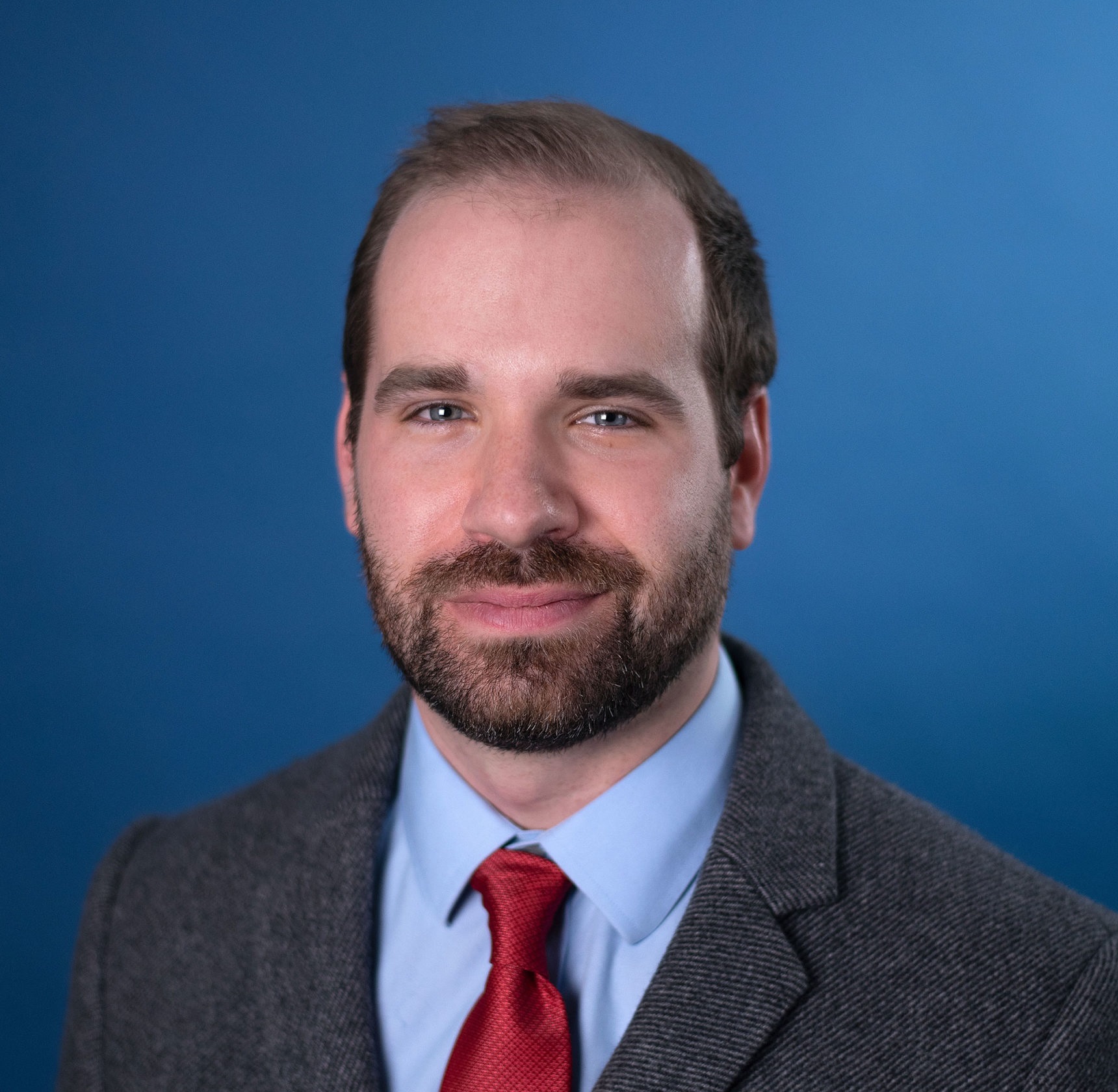
Philip Kowalski is a research analyst at FDD focusing on Turkey. He studies Turkish foreign policy, Kurdish rights, and Turkey’s involvement in the Syrian conflict. He has written essays on international affairs for the Washington Kurdish Institute, OZY and the Middle East Institute, where he was a research assistant in 2019.
He completed his MA at the University of London’s School of Oriental and African Studies, with a thesis on “Reurbanization in Post-Genocide Southeastern Turkey (1925-1940).” Prior to attending graduate school, Philip lived in Turkey between 2012 and 2016. He holds a BA in History from the University of Cincinnati.