3.4K
Kirkuk
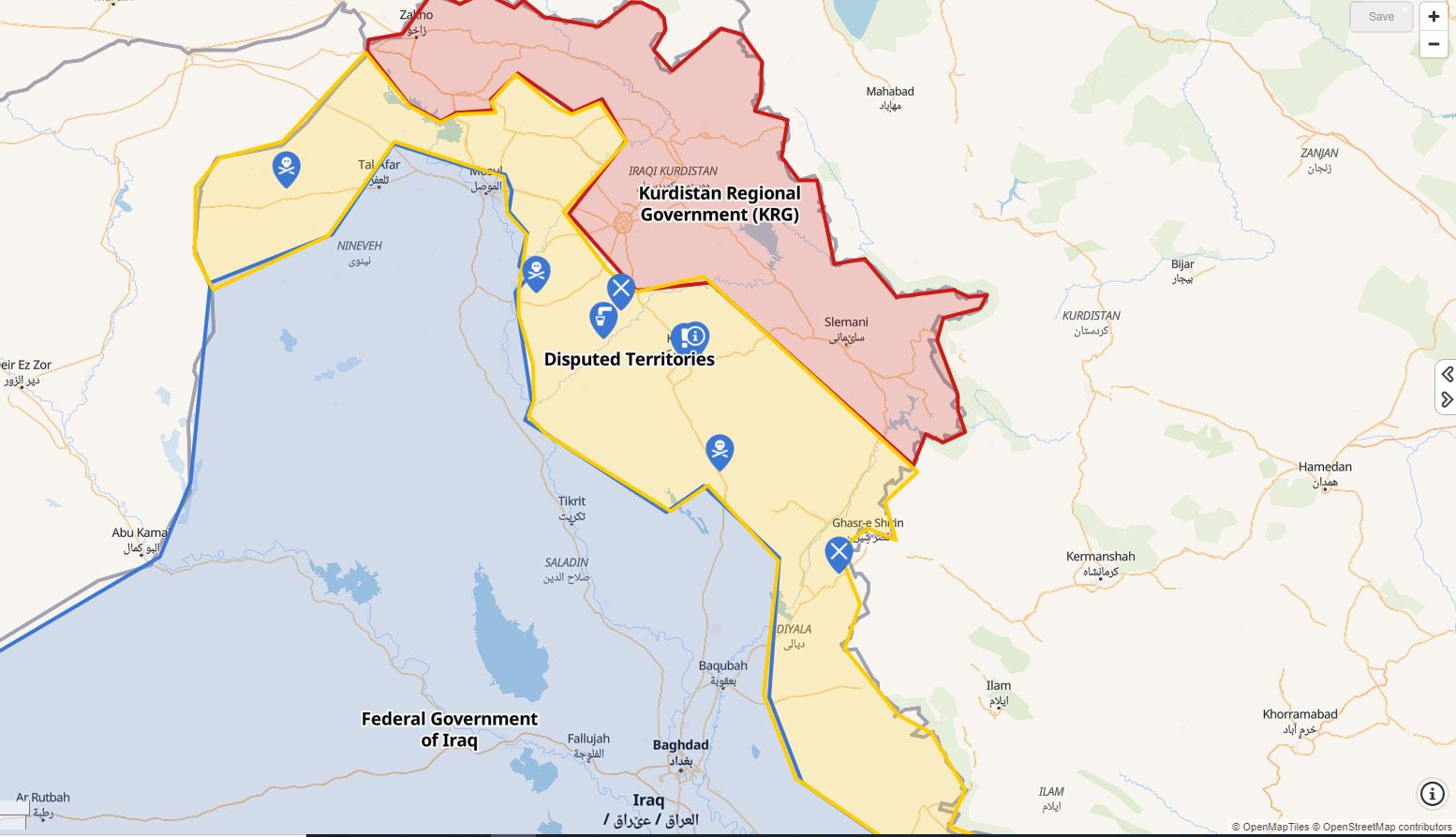
- On November 7, the Iraqi army prevented Kurdish farmers in five villages in the Dibis district from plowing their lands. The villagers said the military stopped their work and informed them of lawsuits on the lands by Arab settlers. The villages, Palkana, Gabalek, Kharabarot, Sarbashakh, and Shanagha, consisting of more than 6100 acres of farmlands; some of those were granted to Arab settlers by the former Iraqi regime.
- On November 9, several Kurdish parties in Kirkuk met to address the issues facing the Kurds in the province. In a press conference, a representative of parties demanded ending the “militarization” of the Kurdish neighborhoods. For weeks, the Iraqi army deployed hundreds of troops into the Kurdish areas and conducted random house searches. The Iraqi military has been deployed in the residential areas on a weekly basis since October 16, 2017. Last week the acting governor Rakan al Jabouri announced the setup of a new checkpoint in Kirkuk’s beltway. The Kurdish parties also accused the administration of discrimination in service project distribution in Kirkuk.
- On November 6, Gharib Askar, a member of the Iraqi parliament, revealed that one billion Iraqi dinars per hour had been added as operating expenses in favor of a company that works for the Northern Oil Company (NOC). Askari said the Oil Ministry would investigate the deputy director general of NOC and the director of the company’s projects department through a committee.
- On November 5, the Iraqi intelligence office prevented the launch of the Kirkuk Theater Festival, which was set for the evening. According to media reports, the decision to suspend the festival came after the assistant of the acting governor, Ali Hamadi, rejected the program’s festival, which included Kurdish actors from Iran, Syria, and Turkey. However, the Kurdish officials, including the Kurdistan Regional Government’s Minister of Culture Mohammed Saed, spoke to Iraqi officials and agreed to hold the festival for Iraqi Kurdish plays only.
Khanaqin
- Sherko Tofiq, the head of the Kurdistan Democratic Party (KDP) branch in Khanaqin, told Shafaq News that in the past four years, 52 Kurdish villages in Khanaqin and surrounding areas had been evacuated. According to Tofiq, 36 villages are in Khanaqin, and 16 are in Jalawla, Qara Tapa, and Sadiyah districts. He said, “The poor security situation and the inability of the security agencies to protect these missing persons are the reasons for the evacuation of the villages.”
Tuz Khurmatu
- On November 7, the security forces announced the arrest of three ISIS (Da’esh) terrorists. The statement said the raid was based on preliminary information and close surveillance and were able to arrest three Da’esh terrorists in a house in the al Jomhuria neighborhood. Separately, on November 8, Tuz Khurmatu police announced the confiscation of many tramadol pills, labeled as illegal drugs by Iraqi laws. According to the statement, the pills were hidden in a hole in a deserted area.
Makhmour
- On November 6, Da’esh terrorists attacked the 4th Battalion of the 11th Infantry Brigade of the Iraqi army near the village of Kharnauk. The attack began with several mortar shells and then clashes. One Iraqi soldier was wounded after half an hour of clashes.
Shingal (Sinjar)
- On November 2, the Baghdad forensic physician revealed DNA tests and identification of relatives of 16 Yazidi victims of the Da’esh genocide. The Iraqi government does not cover the cost of transporting the remains. According to the relatives of the sixteen victims, they were told by the Baghdad forensic physician that they must pay for the transportation and buy coffins for the bodies.
- On November 7, the Integrity Commission announced that it had arrested the director of the Sinjar municipality for conducting business that led to a “waste of public funds.”