Washington Kurdish Institute | December 1, 2025
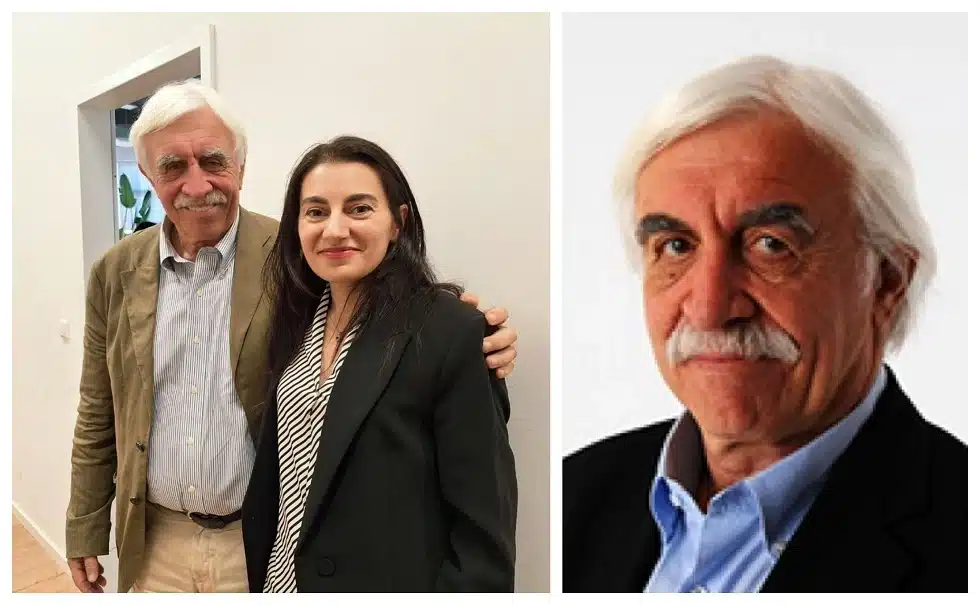
Few figures have observed the political transformations of Türkiye and the Middle East with the depth and continuity of Cengiz Çandar. A journalist, author, and now politician, he has written through wars, peace processes, and the long search for democracy, often with a rare blend of analysis and conscience. In this interview, he reflects on the region’s unfinished struggles and the lessons of a lifetime spent observing its political transformations.
Q: You’ve observed both Türkiye and the wider Middle East through decades of upheaval. How would you describe the region’s current political and moral landscape?
A: In my opinion, what lies for the foreseeable future of the region is uncertainty coupled with chaos. Although, the Trump administration of the United States aspires for a region in alignment from the shores of the Caspian Sea to the shores of the eastern Mediterranean as spelled by Trump’s Special Envoy for Syria, Tom Barrack, it is easier said than achievable. The tranquillity that could be imposed by the hyper power of the U.S. might prevail for some time, but the if the overriding dynamics of conflict generated by the unresolved problems in the region will prevail and undermine the fragile tranquillity at some point. Genocidal policies performed by Israel over the Palestinian people of Gaza with the implicit acquiescence of mainly the Western world suppressed whatever was left of the value-based international order and replaced immorality in international relations cloaked fancily with the concept of realpolitik. Such a phenomenon adds more to the uncertainty and chaos in forecasting the future of the Middle East.
Q: Türkiye’s regional role has shifted from ambition to caution, from mediation to assertion. What do you think defines its position today?
A: The codes are impressively underlined in the question: Caution and assertion. Türkiye is aware that its role is framed by the United States and its Arab allies more than ever in the region, and anti-Israeli stand taken by Erdoğan regime stripped off any meaningful mediation role in the region. Yet, by its geopolitical position, a big population, experience of statehood with an imperial heritage and its economic power as a member of the G-20 club, obliges it to be assertive in the region. At the same time, the uncertainty that awaits a chaotic region pushes it to be cautious as well.
Q: You were among the first to frame the Kurdish question in a regional context. How has that perspective evolved with new alliances, conflicts, and generational shifts?
A: Kurds in every corner of the region emerged as the most dynamic, secular and an indispensable human force. Almost half of them are nationals of Türkiye and despite having great pain and agony in their quest for recognition and equality, they persevered and accumulated rich experience in projecting themselves as the main pillar for democratization of the country. Like Syria’s, Iraq’s and Iran’s Kurds, Türkiye’s Kurds are the most vibrant and progressive segment of the population. Given Türkiye’s posture in the region, anything to the benefit of them will have a very positive impact on their Kurdish brethren and also for the other peoples in the region.
Q: Do you think a peace agreement is possible between President Erdogan’s government and Abdullah Öcalan? If so, what would that look like? Would Kurds have their linguistic and cultural rights guaranteed in a new Turkish Constitution?
A: Yes. What is traversed during the last one-year period would be unthinkable a year ago. The 41-year long armed struggle led by the PKK or the longest and most durable Kurdish insurgency in Türkiye’s republican history is terminated and the PKK disbanded itself following the call of Abdullah Öcalan who believed and led the public to believe that to proceed the Kurdish rights, armed insurrection is no more necessary. That is a tremendous change and forms the basis for a peace agreement between President Erdoğan’s government and the Kurdish leader Abdullah Öcalan. Yet, it is still too early to say how that peace agreement would look like. What is certain is that it will be unique. Whether Kurds have their linguistic and cultural rights in a new Turkish Constitution is a matter of time and that is what we strive to achieve. It is not a hopeless case.
Q: Conflicts from Gaza to Syria continue to reshape regional politics. What, in your view, prevents durable political solutions from emerging?
A: No peace without justice can bring any durable political solution. We are living in an international landscape where might is right rather than the moral values and norms. This factual prevailing situation is a major hurdle that prevents durable political solutions to be translated to the conflicts from Gaza (and also the remaining parts of Palestine) to Syria that shape the regional politics.
Q: Across many countries, from the Middle East to Europe, societies face deep polarisation and disinformation. What do you see as the deeper causes of this erosion of public trust?
A: The answer to this question may require volumes. The atmosphere of fairy tales following the end of Cold War eroded in a decade. We are in the post-post Cold War world and digital age with artificial intelligence that began to dominate our lives. It is also an uneven world searching for multipolarity where authoritarianism dominate almost every regime that compete for global power. Under such circumstances, from where and how we can derive public trust. We have to be patient and perhaps pray to see better times than these interesting times we live through, in the sense of that famous Chinese curse.
Q: Women have long been central to political and civic struggles, yet their agency remains under-recognised in formal politics. What does that tension reveal about how power still operates in the Middle East? What is the solution?
A: I should admit that the women’s presence and power in Türkiye’s Kurdish politics should serve as a good reference point in this respect. We have also referred to how Jin Jiyan Azadi shook the Iranian regime from its foundations thanks to the struggle of Iranian Kurdish women taking the lead inspired by immortal Mahsa Amini. The solution is mostly provided in the program and ideological propositions of Kurdish women mainly in the pro-Kurdish movement of my country, Türkiye.
Q: You’ve moved between journalism, politics, and scholarship. In an age of noise and fragmentation, what does integrity mean for public voices today?
A: It simply means crossing fingers for a brave new world.